This article is from the Australian Property Journal archive
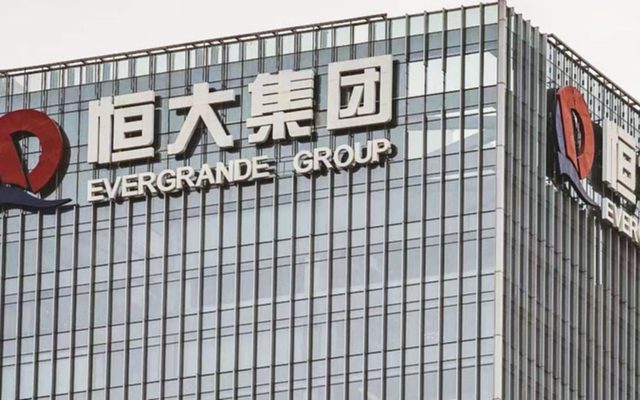
SHARES in Chinese property giant Evergrande have been slashed by another 20% as it grapples with $425 billion of debt and sits close to the edge of default, sparking action from the central bank with other developers defaulting on payments.
In a stabilising move, the People’s Bank of China announced a 50 basis point cut to the required reserve ratio, releasing 1.2 trillion yuan, or $267 billion, to be put towards lending. Nearly all financial institutions will be subject to the reduction, which will come in on 15th December, when nearly 1 trillion yuan of one-year loans mature.
Already facing the end of a 30-day grace period on $82.5 million in coupons, Evergrande revealed via the Hong Kong stock exchange on Friday that creditors had issued a demand for $260 million of debt payments. It has said there is “no guarantee” it will be able to pay off its debts.
Its shares had sunk to $1.81 Hong Kong dollars on Monday, meaning 87% has been wiped off its stock price since the start of this year.
The Guangdong province government summoned its billionaire head Hui Ka Yan to voice their concerns directly, and according to Reuters a group will be sent to the company to “oversee risk management, strengthen internal controls and maintain normal operations”. That was followed by statements from the People’s Bank of China, the country’s banking and insurance regulator and securities regulator.
“Evergrande’s problem was mainly caused by its own mismanagement and breakneck expansion,” the People’s Bank of China.
“Short-term risks caused by a single real estate firm will not undermine market fundraising in the medium and long term.”
China Securities Regulatory Commission said, “The spillover impact of the group’s risk events on the stable operation of the capital market is controllable,” the
Meanwhile, Hong Kong-listed Sunshine 100 China Holding missed its Sunday deadline to make $179 million in principal and interest payments on a 10.5% bond. It also defaulted on a bond repayment in August.
Kaisa Group was due to deliver bondholders US$400 million yesterday after it was unable to renegotiate terms.
That has followed developer Fantasia missing a $282 million bond payment, and Sinic Holdings also defaulted on a debt interest repayment.
The troubles in the real estate sector follow Beijing’s regulatory crackdown with the introduction of the “three red lines” guidelines last year. They consist of a 70% cap on liability-to-asset ratio, a 100% cap on net debt-to-equity ratio, and a floor of 1x cash-to-short-term debt ratio. Developers face different limits on their debt growth depending on how many of the red lines they fail to meet.