This article is from the Australian Property Journal archive
THE property industry has welcomed the federal budget but said more needs to be done including extending the HomeBuilder scheme, reopening borders to overseas migration and changing the withholding tax to attract foreign investment.
The 2020-21 Budget generally received a positive response from the property industry groups due largely to the additional 10,000 places for the First Home Loan Deposit Scheme, and committing an additional $1 billion to the National Housing Finance and Investment Corporation (NHFIC) to $3 billion.
But some industry groups labelled the budget a “lost opportunity”.
Urban Taskforce chief executive Tom Forrest
Forrest said builders and developers would welcome this budget but lament the lost opportunity to deal with the big fiscal issues.
Forrest said although the personal tax cuts, infrastructure investment, First Home Loan Deposit Scheme, wage subsidies for apprentices and business tax incentives will stimulate the economy, this economic crisis created by COVID-19 was an opportunity to take a serious look at tax reform.
“An opportunity for big picture reform – one that Peter Costello, John Howard, Paul Keating or Bob Hawke would not have let slip by. Why not take a look at Ken Henry’s excellent review? Revisit the widening of the GST base. Get rid of distortionary taxes like stamp duty and payroll tax. Every tax review since 1984 has recommended exactly this – but what we got tonight was a solid but un-exciting speech,”

Forrest said the budget failed to address an important area of significant economic concern – foreign investment, which Australia has always relied on in periods of growth and in periods of economic crisis.
“During the GFC the Australian government made it easier for foreign investment to occur. This was a big reason why our property industry kept afloat and kept tens of thousands of workers employed. By contrast, during the COVID-19 pandemic, the Commonwealth and state governments have made it harder for foreign investors to invest in Australia. Foreign investors pay higher stamp duties and land taxes; higher withholding taxes and are subject to strict FIRB rules – all deterring foreign investment.
“The government needs to increase the FIRB threshold to where it was pre COVID-19. State stamp duties and land taxes should not discriminate from foreign investors. Withholding taxes need to be reduced for at least the COVID-19 period.
“These additional taxes and FIRB processes applied to foreign investors are ludicrous. There is no threat to our sovereignty posed by a foreign investor, including north American pension funds, investing in an apartment block, a build-to-rent residential tower or a house and land package on the fringes of our cities,”
Forrest also called on borders to reopen to foreign university students, skilled migration and high net worth investors.
“Australia has proven itself to be a safe, democratic and medically sound nation. The Commonwealth should be welcoming these new immigrants with open arms, supporting additional flights and supporting hotel quarantine undertakings from the states.
Australian Property Institute CEO Amelia Hodge
Hodge said the property industry is still feeling the effects of coronavirus on business activity and the budget’s focus on economic recovery is welcomed.
“Investment by the federal government in extending the First Home Loan Deposit Scheme and the introduction of JobMaker and JobTrainer will keep businesses open and people employed right across the economy and that’s a good thing for the 1.4 million Australians who work and rely on the property industry.
“Consumer confidence, building activity and support for job security will help property transactions continue. At a time when Australians are facing so many uncertainties, the objective advice of property professionals will be needed as families and small businesses consider their financial position. This might include refinancing or selling the family home, farm or a small business shopfront,”
The API has also backed permanent reforms for e-transactions, including property transactions, alongside a coalition which includes the Australian Banking Association and the Real Estate Institute of Australia to increase efficiency in the industry.
“While better access by Australians to credit would be a welcome boost to property and construction, the due diligence provided by property professionals will be so important for Australians to make sure we are lending within our means and with a true perspective of property values – this needs to be considered as the government review’s responsible lending laws.” Hodge said.
Photo Glenn Hunt

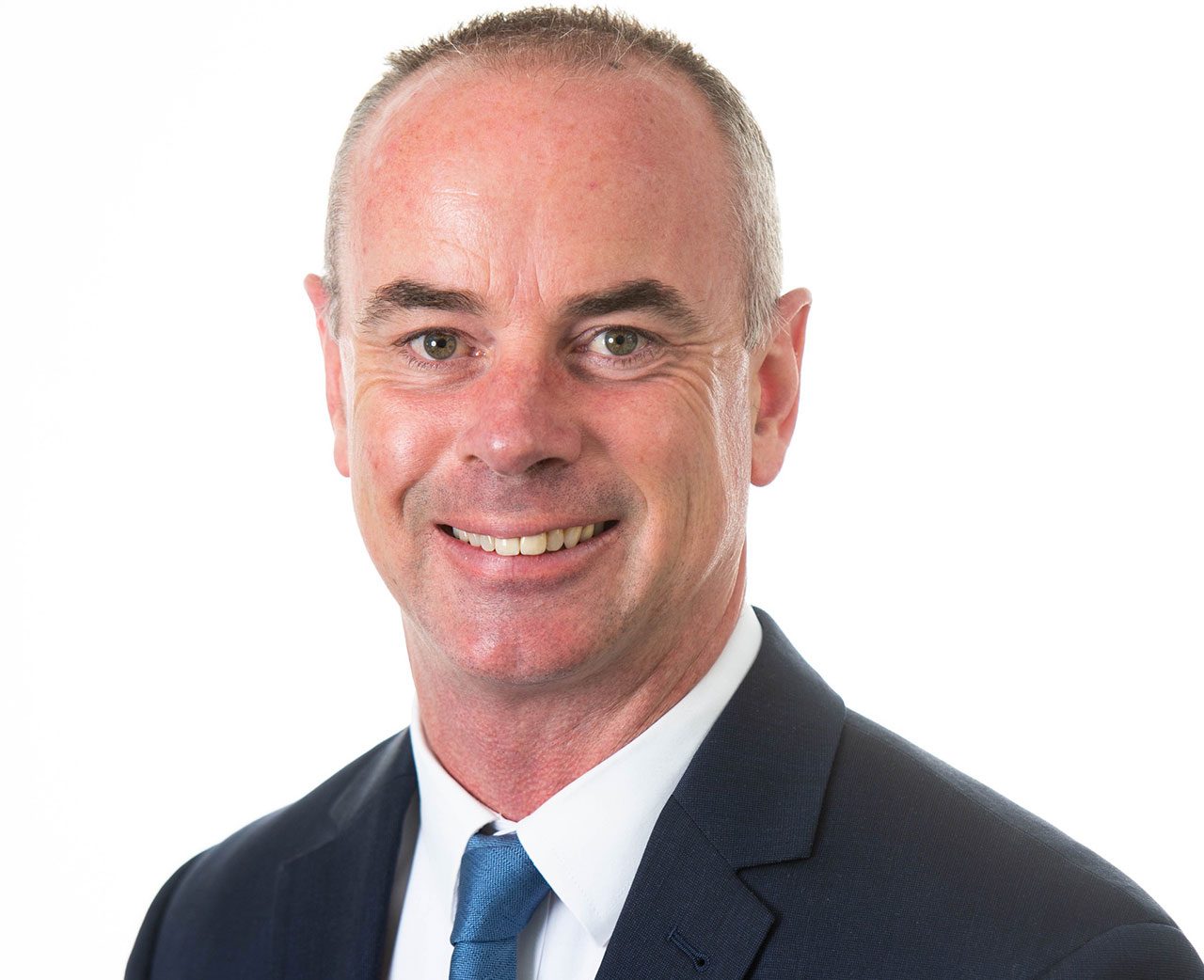
The Real Estate Institute of Australia president Adrian Kelly
Kelly said the budget was a lost opportunity, for a different reason, in helping more Australians into their first homes.
“The First Home Buyer Deposit Scheme should be extended to all eligible buyers of all homes, not just new builds,”
Kelly said that the boost to affordable housing was good news for Australia’s tenants requiring somewhere to live.
“COVID-19 has highlighted that the private sector are carrying most of the load to support our tenants and the government-led affordable housing commitment for NHFIC in the form of $1 billion dollars is most welcomed.”
Property Council of Australia chief executive Ken Morrison
Morrison said the budget highlights the significant progress Australia has made in containing the spread of COVID-19 and the importance of the economic interventions made by the government which meant Australia starts the process of economic recovery from a much better place than most other developed nations.
He welcomed the measures such as bringing forward personal income tax cuts, $10 billion additional infrastructure investment, JobMaker hiring credit and business tax incentives, but said the budget papers also expose a key risk to economic recovery – the population ‘X’ factor.
“One of the three ‘Ps’ of economic growth – population – will be a big drag on the economy. The closure of our international borders means net overseas migration which previously accounted for around 60% of population growth will actually go into reverse next year for the first time since 1946, with an outflow of 72,000 people,”

Morrison said there will be a further 22,000 decline in 2021/22, before net overseas migration rebounds to 201,000 in 2022/23. As a result, Australia’s population growth is expected to fall to 0.2% in 2020-21 and 0.4% in 2021-22, the slowest growth in over a century.
“These population forecasts underscore the critical importance of a comprehensive plan to reboot our migration program and get our population growing again.
“This is a critical assumption for the budget which is also vital to the outlook for our residential construction industry which is a big driver of jobs and economic growth. The Budget forecasts an 11% decline in dwelling investment in 2020/21, before growing by 7% in 2021/22 – but it’s not clear how this can be achieved in the same year that net overseas migration is forecast to be negative.
“Growing our population again will be essential to realising the budget’s forecasts, and requires Australia to safely and methodically begin to reopen our borders to the rest of the world,” Morrison said.
The Urban Development Institute of Australia president Simon Basheer
Basheer is asking the government to extend the HomeBuilder scheme beyond the end of this year. He said the property industry can and must play a central role in powering the nation’s economic revival.
“Housing and construction contribute 750,000 direct and indirect jobs to the nation, so it is well placed to fill the gap caused by border restrictions and slower population growth due to current immigration levels.
“UDIA applauds the decision to release a new tranche of 10,000 places under the First Home Loan Deposit Scheme that are dedicated to new housing construction,” he added. “Importantly, the scheme can work in tandem with the HomeBuilder initiative, and we hope the government keeps an open mind on its extension as well ahead of the end of the year.”
“Research commissioned by UDIA shows the fall in net overseas migration will result in an average per annum reduction of approximately 50,000 homes per year for the next five years.
“Efforts to tap domestic demand and keep jobs flowing across the housing construction sector will be essential to maintaining economic momentum until net overseas migration returns to more sustainable levels.”

Master Builders Australia CEO Denita Wawn
Wawn said the budget will support the building and construction industry as the accelerator of economic recovery.
“Hundreds of thousands of small building and construction businesses will now have hope that they can stay afloat.
“The extension of the First Home Loan Deposit scheme and the $1 billion for the construction of new affordable housing will extend the opportunity to own a home to thousands more people for whom it seemed out of reach,”

Housing Industry Association managing director Graham Wolfe
Wolfe said the budget has given both first home buyers and more than one million workers in the residential building industry the incentive and confidence needed to continue to navigate through these challenging times.
“The measures announced will deliver a pipeline of building work and most importantly help more people access a home of their own.
“An increase in the number of people that can apply for a place in the First Home Loan Deposit Scheme if they buy or build a new home and the $1.2 billion injection into the Supporting Apprentices and Trainees wage subsidy are major cornerstones in supporting jobs across the residential building industry,”

“From a workforce and skilled trades perspective, the extension to the Supporting Apprentices and Trainees (SAT) wage subsidy to cover 50% of an apprentice or trainee wage, up to $7,000 a quarter, provides a great incentive for businesses to take on a new apprentice right now.
“The $2.8 billion initial SAT Scheme has already proven to be successful during 2020, supporting the majority of aspirational tradies as they navigated their apprenticeships during the year. As we approach the end of 2020 and school leavers consider their future career and education options, the SAT extension provides a real opportunity to secure an apprenticeship in residential building industry, and a rewarding career for life.” Wolfe said.